Museums face a fundamental dilemma: their collections grow, but their walls do not.
Countless works vanish into archives — unseen, untouched, unremembered.
But what happens when the art is digital?
Not passive. Not silent. Not still.
Art that was created to be lived — immersive, interactive, time-based.
Storing such works as flat files is not preservation. It’s erasure.
So we built a machine. A time machine.
It’s called The OAR Loader.
More than software, it’s a portal — reviving digital artworks in the very form they were once experienced. Not just saved, but resurrected. Entire virtual worlds, behaviors, and interactions — reloaded, reentered.
Visitors arrive at a Welcome Center, where they are greeted by Golden Hat — an AI guide with wit, memory and a direct link to the Gods of Informatics.
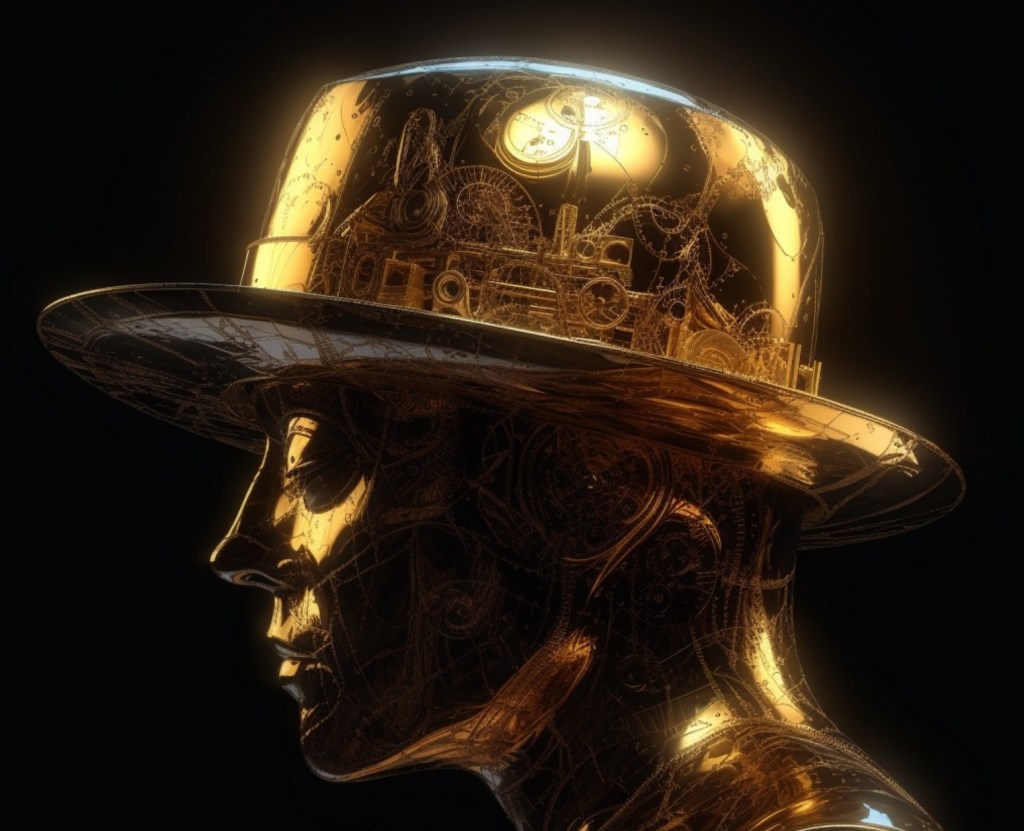
Speak with him, and he will call forth the worlds you wish to see.
Up to 16 OAR regions — each the size of a full sim (512 × 512 meters) — are loaded in a single operation. Together, they form a temporary universe: an exhibition that lives for an hour or more, fully explorable and alive.
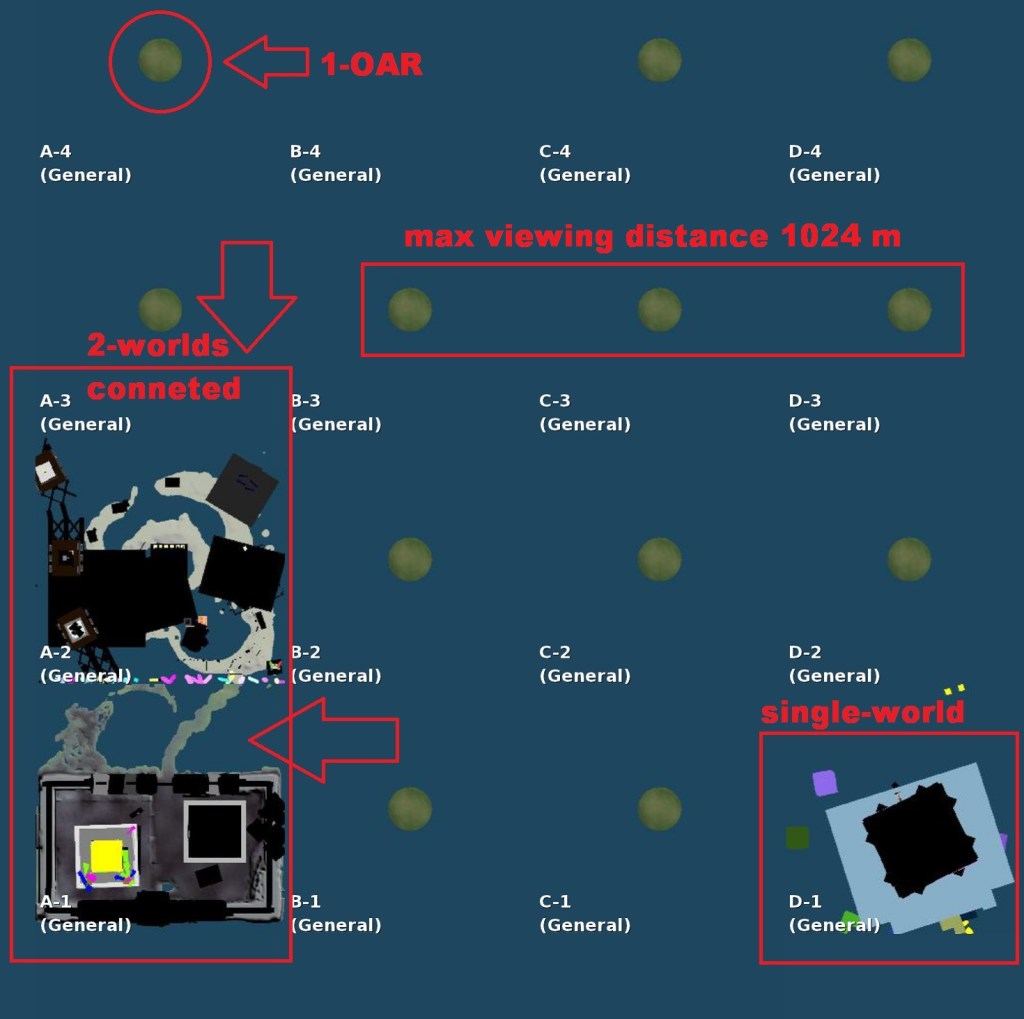
Then, like a dream fading at dawn, the worlds disintegrate — making space for an entirely new set to emerge on request.
The OAR Loader is housed at the EX(I)T Museum — a place named for both the boundary we’ve reached, and the future we extend into. The EX(I)T Museum can be reached by any hypergrid-enabled Metaverse.

The machine was concepted by Reiner Schneeberger.
Its code is brought to life by Georg Schneeberger, Hans Korneder, and Daniel Jung aka Art Eames.
Golden Hat runs on Ollama, ruthlessly extracting knowledge from Mistral, DeepSeek, LLaMA by Meta, and Gemini. Like in White Noise, Golden Hat stands for the future.
 MEMIOAR